Why aren't you getting interview calls?
Most job seekers apply to dozens of roles and hear nothing back. The problem is rarely the CV itself — it's that your CV is being evaluated against a set of hiring signals you can't see. Recruiters don't read CVs line by line. They scan for specific indicators: role archetypes, dimension scores, keyword clusters, and experience patterns that match their internal shortlist criteria. These signals are buried inside the job description, invisible to the untrained eye. Scop'd decodes them. Paste any job description and within seconds you'll see the recruiter's signal map — what role archetype they're actually hiring for, which dimensions they're weighting most heavily, and precisely which signals your CV is missing. Fix those gaps before you apply and dramatically improve your screening odds.
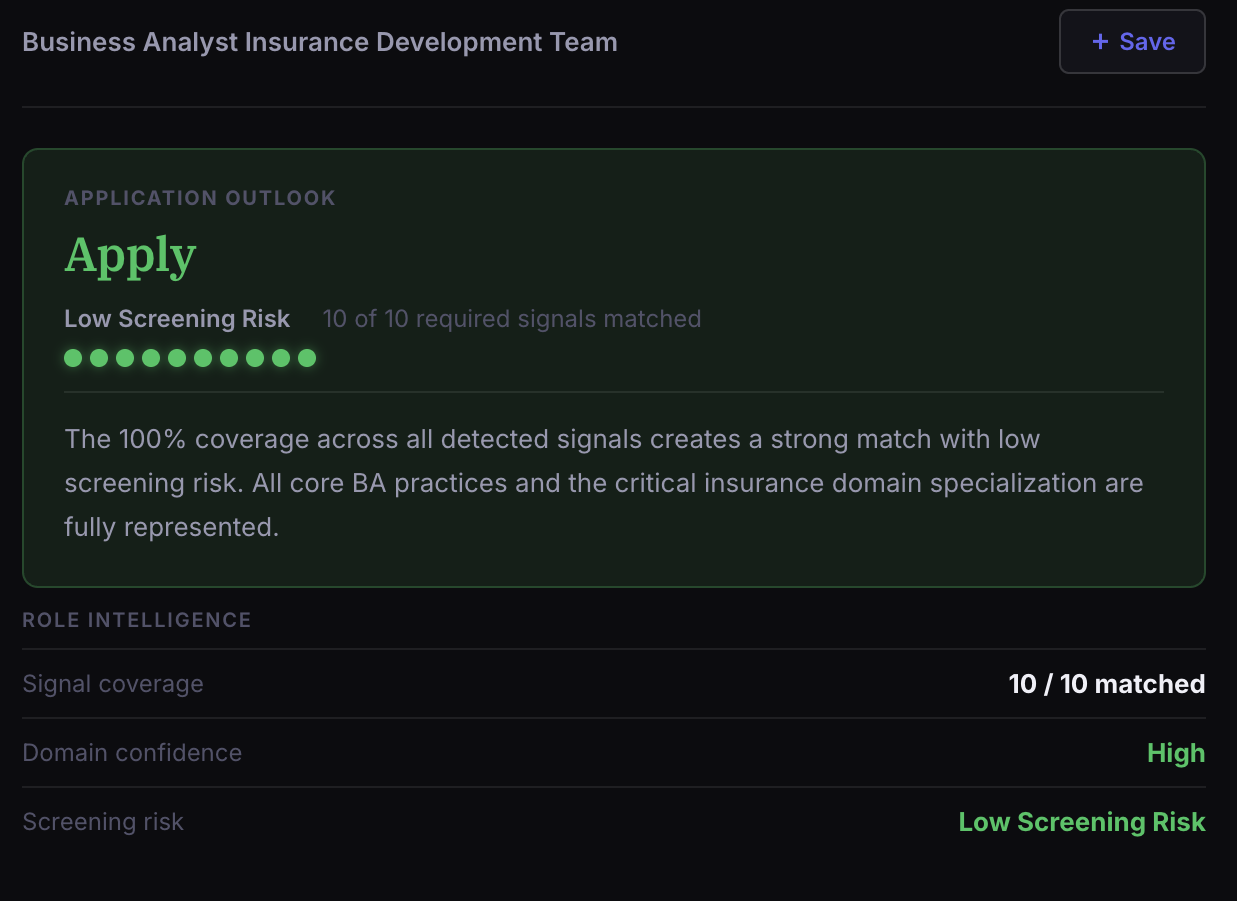
See what recruiters actually filter for
Every job description contains two layers of information. The surface layer is what the hiring manager wrote: responsibilities, qualifications, and requirements. Beneath that is the recruiter's signal layer — the specific patterns, terminology, and experience markers that their shortlisting process is calibrated to detect. Scop'd operates on the second layer. When you paste a job description, Scop'd classifies the role into one of several archetypes (for Business Analyst roles: Requirements BA, Process BA, Delivery BA, or Transformation BA), scores the four key hiring dimensions — Analytical, Delivery, Decision, and Stakeholder — and extracts every individual signal the recruiter is filtering for. The result is a complete picture of what the recruiter is actually evaluating, not just what they chose to write in the job ad.
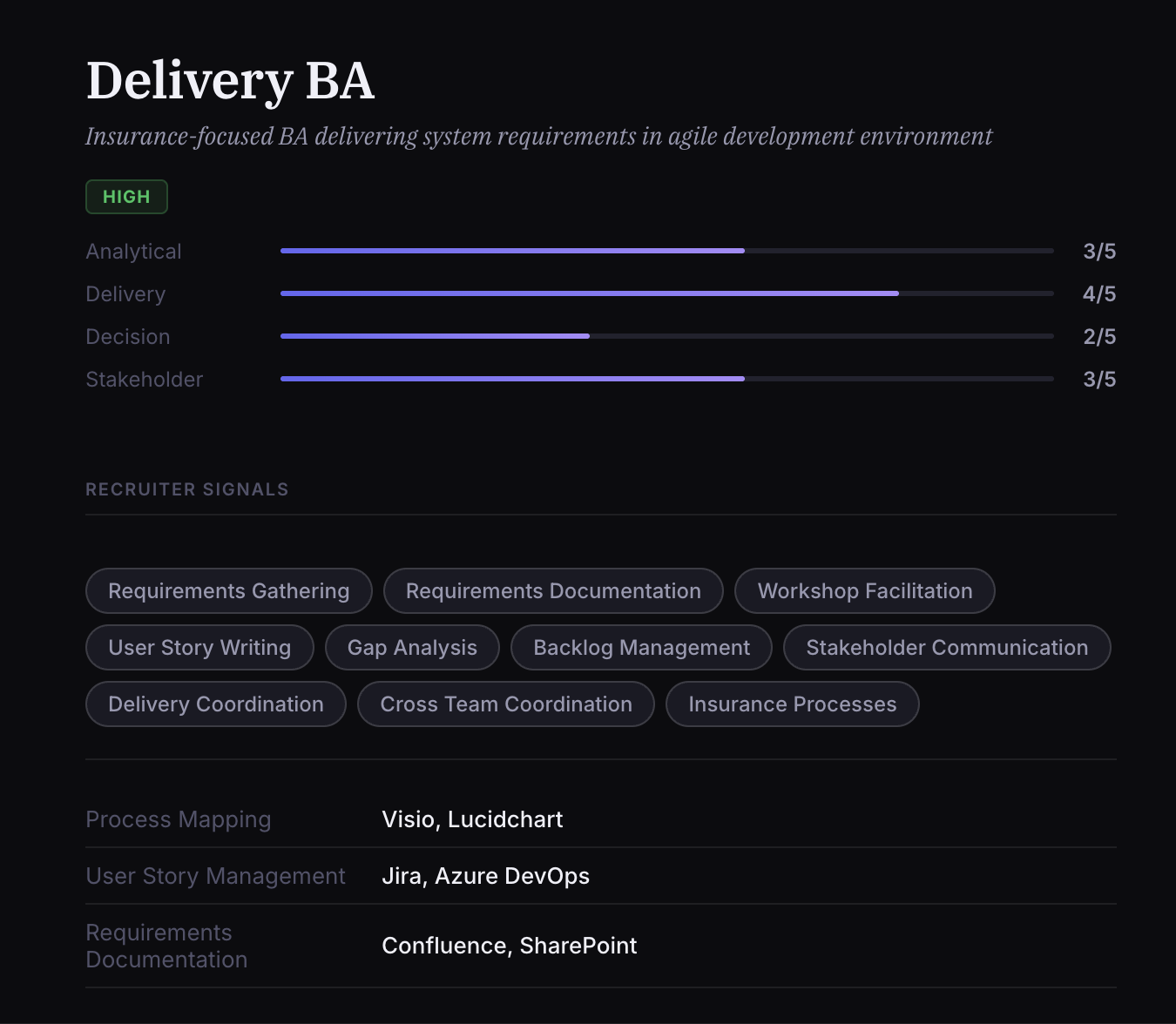
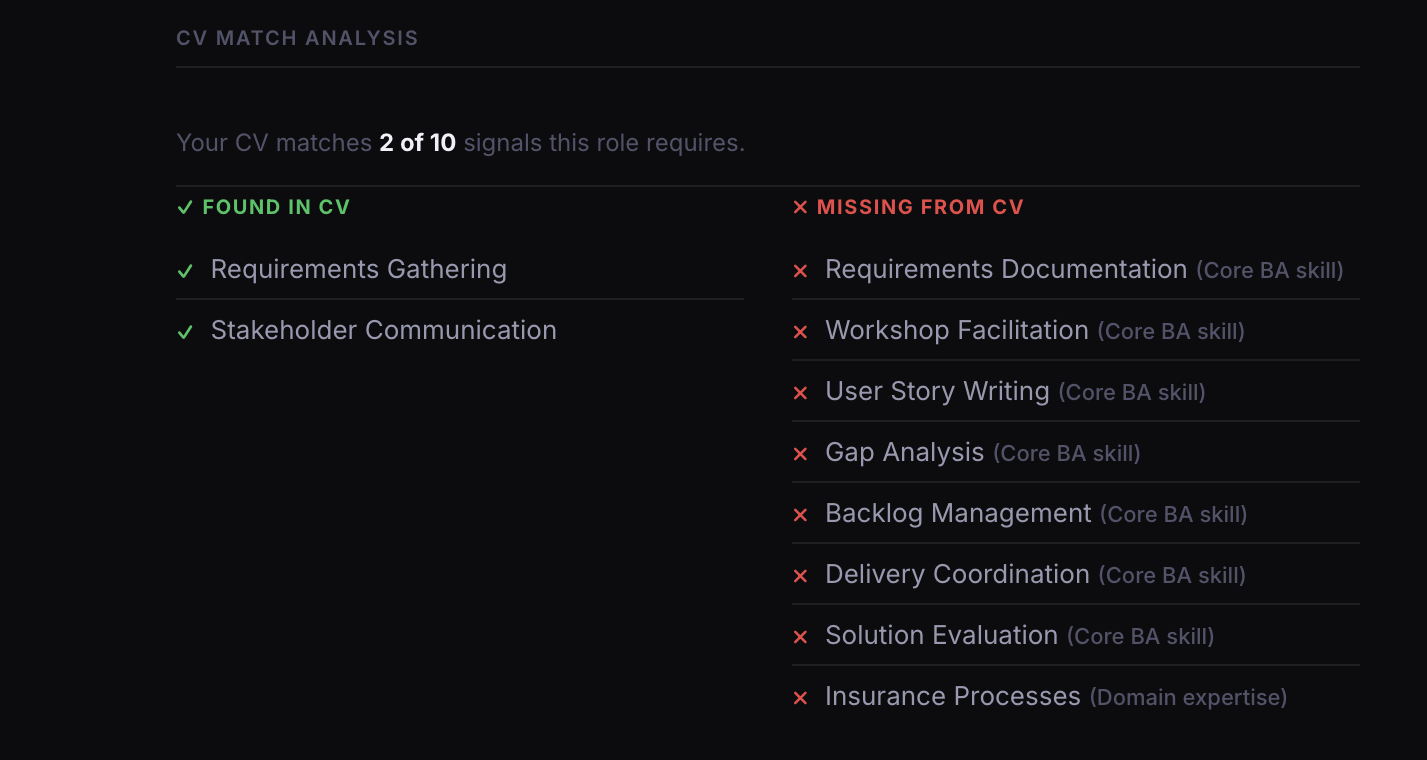
Know exactly why your CV gets rejected
The gap between a strong CV and an interview call is almost always a specific set of missing signals. A recruiter running a Business Analyst search isn't asking "is this a good candidate?" — they're asking "does this CV show experience with requirements elicitation, stakeholder management, and process documentation?" If those signals don't appear in the right context, the CV gets filtered before a human ever reads it. Scop'd closes this information gap. After decoding the job description's signal map, Scop'd compares your uploaded CV against each signal individually and shows you a matched versus missing breakdown. You can see at a glance which signals your CV already demonstrates, which ones are absent, and which gaps represent the highest screening risk for the specific role you're targeting.
How Scop'd Works
Three steps. Five seconds. Zero guesswork.
Paste a Job Description
Copy the full job description from LinkedIn, Indeed, or any job board and paste it into Scop'd.
Decode Recruiter Signals
Scop'd classifies the role, extracts every hiring signal, and scores the dimensions recruiters evaluate.
See Your Screening Risk
Upload your CV to see exactly which signals you match — and which gaps are getting you filtered out.